


Drones can also be disabled during flight by a specific sound.

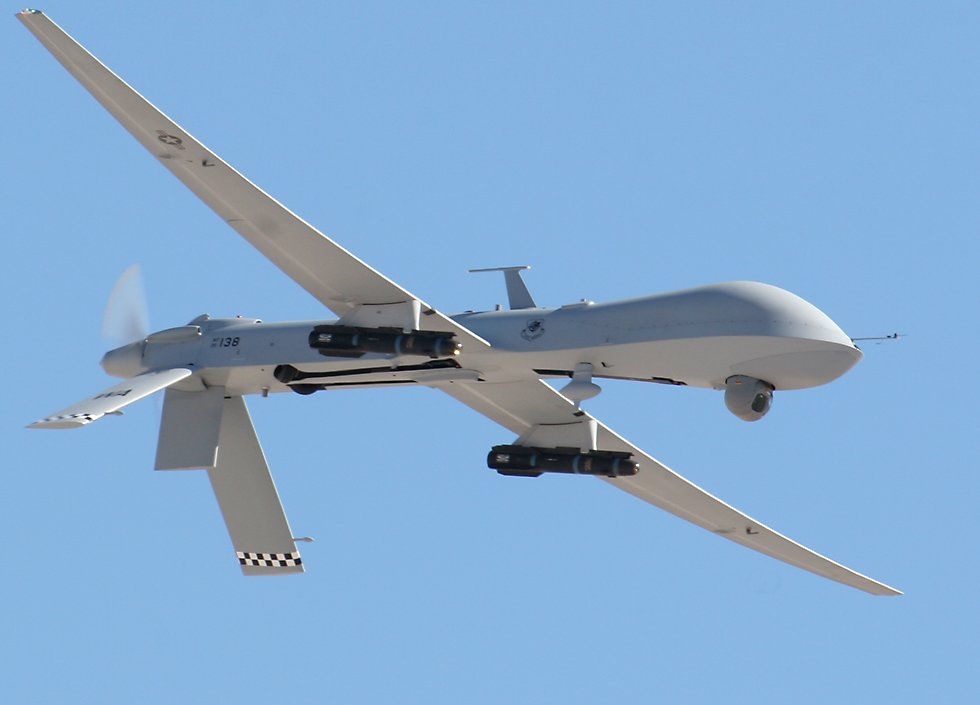 A team of scientists from the Korea Advanced Institute of Science and Technology, KAIST, has highlighted an interesting weakness in drones, the unmanned flying machines with rotors that are now commonly sold.

According to their findings, some of them could potentially be disabled during flight by a specific sound.
PC World reported on the research.
The component responsible for this weakness may be the gyroscope, which is used to detect orientation and rotation and then stabilize the drone using its rotors. According to KAIST’s findings, several commonly used gyroscope models have a resonant frequency at which sound can potentially cause them to vibrate.
Subsequently, resonating gyroscopes give very unstable data at the output, which, although they have the correct average value, oscillate with a very large deviation. KAIST specifically tested fifteen gyroscopes and found the resonance frequency in seven of them, in one case around 9 kHz, in the other two around 20 kHz and in four around 26 to 28 kHz.

Oscillation of data from the gyroscope oscillating to resonance frequency (blue) and without influence (red) (Image: KAIST)
KAIST used two of them in do-it-yourself drones: the STMicroelectronics L3G4200D gyroscope in a drone with MultiWii control software and the InvenSense MPU6000 in a drone with ArduPilot software. Analysis of the software already showed that strongly oscillating gyroscope data can significantly affect rotor control.
Video
illustrative video, knocking out a drone with chimpanzees
The scientists also tested the weakness in practice by generating the sound that caused the oscillation with a Bluetooth speaker attached to the drone itself and pointing towards the gyroscope. In the case of a drone with L3G4200D, it was reliably knocked out in each of the twenty attempts and the drone fell to the ground. In the second drone, the resonance did not disable it, because data from the gyroscope used oscillates only on one axis and the drone also obtains data from a magnetometer.
Of course, the experiment is not a practical attack. But the team measured the minimum required sound intensity to disable the drone and then calculated the maximum distance to achieve such an intensity when using strong directional sound sources. When using the LRAD 450XL with 140 dB, it should be up to a distance of 37.6 meters, but the scientists did not actually test it.

Source PC World.
