


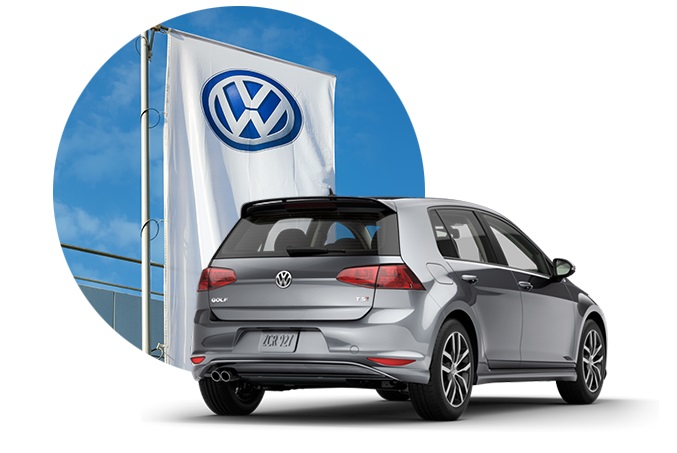
Car thieves can unlock 100 million Volkswagens with a simple wireless hack

The next time you leave the car in the parking lot, remember that you do not leave valuables in it, especially if it is a Volkswagen vehicle.
What’s even more disturbing?
The new attack affects practically every car that Volkswagen has sold since 1995.
In almost every car sold by the Volkswagen group after 1995, there are two vulnerabilities, including the Audi, Škoda, Fiat, Citrren, Ford and Peugeot models.
 Non-destructive
deterrence of
rodents,
wildlife
and snakes.
Computer experts from the University of Birmingham and the German engineering firm Kasper & Oswald plan to present their research [PDF] Later this week at the USenix security conference in Austin, Texas.
{Googleads Left}
Attack 1 – Use of an Arduino-based RF transmitter (price $40)
The first attack can be done using cheap radio equipment, which can be made for just $40 with a small control panel and radio receiver, but is able to eavesdrop and record the values of the rolling code used by keyless input systems.
The code values are included in the signal sent whenever the button control button is pressed, which are then used together to emulate a key that is unique to each vehicle.
The researchers then managed to reverse the innovation of one component in the Volkswagen network and were able to obtain a cryptographic key that is shared between millions of Volkswagen vehicles.
Now, by combining two allegedly secret keys, scientists have been able to clone key fobs and access to the vehicle.
“With knowledge of these keys, the opponent must only listen to a single signal from the target remote control“The researchers said.
“Then it can decrypt this signal, get the current UID and counter value, and create a clone of the original remote control to lock or unlock any door of the target vehicle repeatedly at will.”
Although the team did not reveal the components they used to extract the keys to prevent potential hackers from taking advantage of this weakness.
However, they warned that if qualified hackers find and publish these shared keys, each of them could injure tens of millions of cars.
In the last 20 years, only the four most common keys are used in all 100 million vehicles sold by Volkswagen.
Only that The latest VW Golf 7 and others that use unique keys are immune to attack.
Attack 2 – Hijack with HiTag2 and radio equipment in 60 seconds
In the second attack, the team managed to attack a cryptographic scheme called Hitag2 – Decades-old code, but still used in millions of vehicles, including Alfa Romeo, Chevrolet, Peugeot, Lancia, Opel, Renault and Ford.
To perform this attack, all hackers need a radio setup similar to the one used in the above hack.

Using a radio device, scientists were able to capture and read a string of coded signals (numeric encoding that changes unpredictably every time a button is pressed) from the controller.
By collecting codes, the researchers found that errors in the Hitag2 scheme would allow them to crack the scripts in less than a minute.
Since the two attacks focus on unlocking cars rather than stealing them, lead researcher Flavio García told WIREDthat these attacks may be associated with already exposed bed bugs in “immobilizer” systems Hitag2 and Megamos, allowing “millions of Volkswagens and other vehicles from Audi to Cadillac to Porsche to be led by thieves.”
You will also read: (en) Rolljam – $30 device that unlocks almost all cars and garage doors
{Googleads Left}
This is not the first time this team of researchers has focused on Volkswagen.
In 2013, he discovered a way to start the ignition of Volkswagen cars, but he had to withhold his conclusions for two years, because the VW Group threatened them with a lawsuit.
The researchers reported the shortcomings of VW Group and agreed not to make cryptographic keys, part numbers of vulnerable components, and the way they processed the processes.
Car hacking is a hot topic today.
Recently, security researcher Benjamin Kunz Mejri published zero-day errors in the official web domain of BMW and the ConnectedDrive portal, which allows attackers remotely manipulate information system in car in BMW cars.
Previous research has shown that hackers can remotely destroy a vehicle and control its steering and brakes and block critical vehicle functions such as airbags by using security flaws affecting major cars.
Bearing in mind these risks, the Michigan State Senate in April 2016 proposed two laws that introduce into jail Life sentences for people who hack electronic car systems.
FBI also released public warning warning people about the risks of car hacking.
So people, Your cars are not a safe place.
Source: thehackernews.com
