


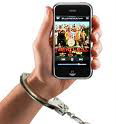
Journalists were eavesdropped. Tomorrow may be your GSM mobile phone.

GSM (Global System for Mobile Communications) is a standard technology used on all continents. It is used by billions of people. However, Nohl with Munaute’s network developed in the 1980s with instruments from the 21st century is described as easily vulnerable. (The technical version of the GSM was done in 1987, then in 1990 the technical specification.)

The procedure of Nohl and Munaut was quite simple – like many other hackers and crackers in various fields, they used reverse engineering techniques. In short, they turned the mathematical algorithm that takes care of encryption in the system. Thanks to this, it was easy to track and eavesdrop on selected calls.
{Googleads Right}
It is said that There is power in simplicity – both experts for eavesdropping were enough for a laptop and a modified mobile phone. For their purposes, they used a certain type of mobile phone of the Motorola brand, in whose operating system the necessary changes were made and then used the obtained information to write their own software, which is able to obtain hidden technical information from base mobile stations.
Then they showed journalists from the BBC how to find selected mobile devices, how to track his movement for more than half a kilometer and how to extract information from it, including calls.
The BBC said that neither NOHL nor Munaut had plans to describe their technique in detail on the web or to release the necessary tracking tools. However, they both warn that it is only a matter of time until someone else will do it instead. The situation is said to be not unlike when calls via analog phones could be easily eavesdropped only with ordinary radio scanners (receivers).
Addressing telecommunications security experts refer to the weaknesses of GSM and the technique of Nohl and Munaut as a real and serious problem. “It won’t take long for someone else to do the job,” said Oliver Crofton, director of Vigilante Beskope.
Crofton BBC also revealed that when his firm examined various mobile devices, it was found that about a quarter of them contain modified software or hardware so that the phone can easily send information about itself, such as location, text messages, or contacts. “We are not talking about teenagers’ games here, but about organized crime, sneaky journalists and blackmailers,” he added.
The GSMA (GSM Association) also responded to the weakness revealed by Karten Nohl and Sylvain Munaut. It stated that the error concerns the older implementation of GSM. However, this does not mean that it is not used worldwide. It still is (other than Nohl and Munaut were able to do).
{Googleads Right}
It is also a mistake that when GSM was deployed in the world in the late 1980s, no one thought that the same technology would be used for more than 20 years. This is also what Charles Bookson, head of the security group from the GSM association, said this. “We knew that as technology would age, more and more holes would appear.” Regarding the security used, in this case already weak encryption, he said that at that time the algorithms used were strong and nothing prevented their deployment. That some algorithms and their implementation will “age” over time, and therefore they are no longer safe, even users of wireless networks, who are not advised to use the old type WEP (Wired Equivalent Privacy) type, but preferably WPA2, know to secure a WiFi network. In the past, the GSM association advised all its 750 members from the ranks of mobile operators to innovate in order to ensure greater security of their network. As is clear, some operators underestimated the obsolescence of the networks.

{youtube}znm1hyiyg{/youtube}
But Brookson doesn’t think that the method of attack performed by Karten Nohl and Sylvain Munaut would somehow take root. “Yes, this type of attack can be done, but they are not exactly what a normal person would do.” However, this argument does not solve the basic problem, namely that eavesdropping are relatively simple and available to those who are able to perform. Not every person is interested in eavesdropping on people. But who does, has a chance.
Brookson’s words were confirmed by analyst Nigel Stanley, who himself is engaged in testing the security of mobile devices. Even he does not think that this type of attack would be fundamentally expanded – he believes that in the framework of laboratory testing, it is possible to study holes in the GSM and abuse it quite well, because one has access to all aids, but in the field it is already It’s not that easy. “If people go out, walk down the street and try to eavesdrop on someone’s real-time conversations, it will be a little harder.”
If people want to increase the security of their calls, they have the opportunity to use modern phones today with software that encrypts their communication much better, and they should use a third-generation mobile network.
Regarding the software for call encryption and SMS, let’s recall last year’s case when the Czech software company CircleTech went public with the fact that the security information service (BIS) was exerting pressure on it to software for communication encryption built in the back door – that is, so that the communication can be eavesdropped. The MF Dnes newspaper came up with the information last September.
{youtube}fibl6xoqflm{/youtube}
The company talked about blackmail – BIS wanted to find out the content of encrypted short text messages and calls and offered money for a reward from CircleTech. The co-owner of the company, Jiří Šatánek, obtained a hidden audio recording from meetings with officers. “You have the opportunity to secure an income that you don’t have to tax. Let’s say,” said one of the BIS officers in a recording that the company published.
When things didn’t go well, BIS tried it somehow after a bad thing, when the officer told her to Mr. Šatánek that “we communicate with people and companies normally. The operative activity is done differently. Then other people get in there who don’t want to be with someone have fun.”
