


Hardware for studying RFID at 125 kHz and 13.56 MHz

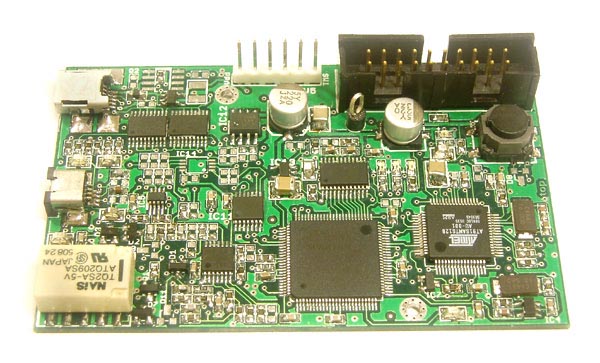 Proxmark3 is a powerful general-purpose RFID tool, about the size of a deck of cards, designed to snoop, listen to and emulate everything from low-frequency (125 kHz) to high-frequency (13.56 MHz) tags.

This device can do almost anything involving almost any type of low-frequency (125 kHz) or high-frequency (13.56 MHz) RFID tag. It can act as a reader. It can eavesdrop on a transaction between another reader and a tag. It can analyze the signal received over the air in more detail, for example to perform an attack in which information is inferred from a tag’s instantaneous power consumption. It can pretend to be a tag itself. It is also capable of some less obviously useful operations that may come in handy during development.
It should be stressed early on that the Proxmark3 is not really for beginners. Unless you are already fairly familiar with electronics, embedded programming, some RF design and ISO standards, this device will probably bring more frustration than anything else!
If you are sufficiently hardcore, you can build one yourself. Eagle PCB designs, Gerber files and so on are freely available. An updated component list is available to help you source components from all the major suppliers. Alternatively, you could buy a ready-made board from somewhere such as proxmark3.com or hackable-devices.org.
Typically, an out-of-the-box Proxmark3 running the latest firmware can acquire signals in LF and HF modes and output traces, decode a number of different tag types quite usefully already, and perform some operations in ISO 15693 and ISO 14443 A and B modes. However, if you really want to get the most out of this device, you will need to start enhancing the firmware yourself to suit your needs.
As long as you only want to add higher-level functions on top of the RF layers already built into the FPGA, you should be fine even without knowing VHDL. However, if you want to go deeper and have the Proxmark3 support new modulation schemes, this will require modifying the FPGA’s Verilog code: an interesting exercise if you are motivated or already familiar with the field, but very time-consuming if you are just getting started!
You should now have a fairly good idea of whether this tool is for you!
Proxmark3 hardware description – buy exclusively from www.market.sk
This hardware description has been borrowed, with the author’s kind permission, from Gerhard de Koning Gans’s thesis entitled “Analysis of the MIFARE Classic used in the OV-Chipkaart project”.
This device supports both low-frequency (125–134 kHz) and high-frequency (13.56 MHz) signal processing. This is achieved by implementing two parallel antenna circuits that can be used independently. Both circuits are connected to a 4-pin HIROS connector, which serves as the interface for external loop antennas. To behave as a PCD or reader, it is possible to drive the antenna coils at the appropriate frequency. This is not necessary when the Proxmark is used for sniffing or when it emulates a card. In that case, the field is generated by the reader.

The signal from the antenna is routed through a Field Programmable Gate Array (FPGA). The FPGA relays the signal to the microcontroller and can perform some filtering before sampling. The Proxmark software implementation allows communication between RFID tags and readers to be eavesdropped on, a tag to be emulated, and a reader to be emulated.
Despite the basic hardware support for these operations, the actual processing of the digitized signal and its modulation and demodulation must be programmed for each specific application.
Proxmark III is a device developed by Jonathan Westhues that enables sniffing, reading and cloning of RFID (Radio Frequency Identification) chips. For my master’s thesis, I wanted to examine communication with Mifare Classic cards. Mifare Classic is used in many applications and is the most popular contactless card around. It is used in e-ticketing, public transport and access control. The higher-level protocol is kept secret by the manufacturer (NXP). I implemented the ISO14443 Type A standard for the Proxmark, since Mifare is based on this communication standard.
After many bugs and a lot of noisy traces, the Proxmark was ready for some real analysis. I focused on the Mifare Classic card and was pleased to see the communication between a card and a reader displayed on my screen. I could see the anti-collision phase, during which the reader selects a card to communicate with. This was followed by authentication, after which all communication was encrypted. The results of this research are published on arxiv.org as “A Practical Attack on the MIFARE Classic”.
In December 2007, I saw a presentation by Karsten Nohl and Henryk Plötz, in which they showed how to reverse-engineer the Mifare Classic chip. I was working on the same subject in Nijmegen. The Mifare system relies on security through obscurity, and now that the secret has been revealed, no card-level security remains.
The YouTube video shows a demonstration that we gave on 12 March. It shows how we gained access to a building using a cloned card.
We will not release the software used in the MIFARE Classic attacks.
Gerhard de Koning Gans, Roel Verdult
In 360 Seconds: Hijacking with Hitag2
Watch video 2
The Proxmark3 kit includes everything you need to get started doing RFID / NFC research in style. It has always been our mission to prevent DOA shipments and so all of our Proxmark gear is thoroughly tested in-house prior to shipping.
Inside the box you’ll find an Enclosed Proxmark 3, an LF Antenna, an HF Antenna, 3 read/write LF tags (T55x7), 1 HID Prox II tag, 1 Mifare Ultralight, and 1 Mifare Classic tag, 2 antenna cables, and 1 power/communication cable. The Proxmark client software and firmware are open source and available for download. We offer pre-compiled versions that correspond to the current version in use on the board (see links on right).
The Proxmark is the only SDR targeting NFC and RFID frequencies that is capable of both transmitting and receiving while meeting the timing requirements of most proximity protocols. The Proxmark also provides full control over the radio layer in addition to software support for several higher-level protocols (ex. Mifare).
The LF Antenna enables communication with tags that operate at 125kHz and 134kHz (including HID Prox II, HITAG, and EM4100). The HF Antenna enables communication with tags operating at 13.56Mhz (including Mifare Classic/Ultralight, and iClass).
The Proxmark has proven itself to be an invaluable tool within the research community. Here are some examples of how the Proxmark has been used to perform research:
- Proxmark3: The Swiss Army Knife of Security Research
- Exploring the NFC Attack Surface
- A Practical Attack on the MIFARE Classic
- Analysis of the MIFARE Classic used in the OV-Chipkaart project
- Potential Misuse of NFC Enabled Mobile Phones with Embedded Security Elements as Contactless Attack Platforms
- Outsmarting Smart Cards
- Evaluation of the feasible attacks against RFID tags for access control systems
Rysc Corp. pioneered the first commercial Proxmark offering back in 2008. Prior to that point, obtaining a Proxmark meant building one yourself. Since that first commercial offering we have continued developing the device and have assisted thousands of individuals and companies, large and small.
The Proxmark also makes a great educational tool. The entire platform (including hardware and software) is open source and can be readily analyzed and inspected. The Proxmark includes many of the major components found in a general purpose SDR but is simpler and therefore easier to understand. Faculty members should contact us about educational discounts if interested in incorporating the Proxmark into a course of study.
WARNING: The Proxmark3 is a research and development tool. It has not been evaluated for compliance with regulations governing transmission and reception of radio signals. You are responsible for using this product in compliance with your local laws.
