


Credit top-up security breached in the Czech Republic too; it is similar here — Proxmark 3

An application has appeared online that allows credit on the Plzeň Card, used among other things to pay public-transport fares, to be manipulated. Load it onto a phone with NFC technology, and the card can be topped up at will, its personal data read, or even the card deactivated.
 Non-destructive
deterrence of
rodents,
wildlife
and snakes.
The paradox is that the tool enabling this security flaw is actually offered by Plzeň City Transport themselves. In cooperation with Telefónica O2, they introduced phones supporting NFC 22.
Such a phone is the key to the entire security problem. The companies have therefore put an ideal tool in people’s hands for easily manipulating the Plzeň Card and the data stored on it.
A simple Java application is available online, allowing the card to be topped up easily, its personal data read, or even the card deactivated. People with various motives need only keep a phone running the application in their pocket on a crowded tram: they can render nearby passengers’ cards unusable, learn their dates of birth and names, or increase or reduce the credit currently stored on their cards.
Communication with the card is contactless, but works only over a distance of centimetres. On the other hand, an obstacle between the phone and the card does not matter: communication works through clothing or a handbag.
The company also appears to be well aware of the problem. How else can its offer of a shielding sleeve, intended to protect the Plzeň Card against such attacks, be explained? The editorial team had not received an official statement from Plzeň City Transport by the time this text was published, but is prepared to publish one later.
A unique system, a unique screw-up
Technically speaking, Telefónica O2, probably in cooperation with Nokia, allowed the transport company to use the secure part of the memory that NFC phones use to communicate with fare-validation terminals in Plzeň’s public-transport vehicles. Given the questionable security of RFID cards using Mifare Classic technology, as the Plzeň Card does, the companies supplied the public not only with a nice phone, but also with an excellent electronic-wallet charger.
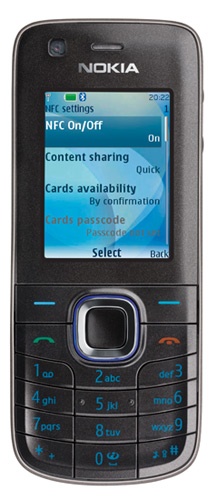 Nokia 6212 Classic phones that can be used to pay fares are available at O2 shops in Plzeň. However, these phones can also be used to add credit to the Plzeň Card’s electronic wallet without control and to read personal data without the user’s knowledge.
The transport company’s website nevertheless states that the Plzeň Card “is the most secure of all the possible means currently used for similar purposes. Technological misuse is essentially ruled out.”

A problem left unresolved for years
Plzeň City Transport has offered the Plzeň Card since 2004. It is based on Mifare Classic technology, then regarded as something of a security standard. Its weaknesses soon became known, however, security attacks occurred and many companies began turning away from the technology. Yet Plzeň’s transport company continued expanding its use.
By the end of 2008, it was already clear that Mifare-type cards could no longer be maintained in operational systems. That year, Mifare’s internal structure was discussed and surprising details were presented publicly. A precise technical description of its security eventually became public, followed by hacker attacks. Victims included, for example, the London card and the Dutch railways’ card.
In Plzeň, by contrast, the system was ceremoniously expanded to include an electronic wallet two years after the problems had been identified. The Czech National Bank authorised Plzeň City Transport to use contactless Mifare cards as electronic money.
What is what: a glossary
What is NFC?
NFC stands for Near Field Communication: communication over short distances through an electromagnetic field, or radio waves. It resembles Bluetooth, but uses a much longer wavelength in the shortwave range. It is the same wavelength used by some contactless smart cards, so devices with this technology can replace those cards. NFC is defined for a frequency of 13.56 MHz and a data-transfer rate of up to 824 kbps. The current trend is to integrate the technology into mobile-phone SIM cards. NFC can also replace Bluetooth to some extent and allows data to be transferred directly between phones.
What is RFID?
RFID stands for Radio Frequency Identification, a system capable of recognising and identifying an entity using radio waves. It may be a tag sewn into clothing, a label identifying a warehouse location, goods in a shop or a component in a factory production process, or an access card for a building, office or hotel room. RFID tags are now produced in large numbers and many shapes: from millimetre-sized capsules intended for implantation under the skin of living beings, through small, very strong and durable modules for identifying functional product assemblies or the contents of shipping containers, to familiar key fobs and standard plastic cards.
What is the Plzeň Card?
The Plzeň Card is also such a tag, manufactured by NXP under the Mifare trade name. It operates at the same frequency as NFC, 13.56 MHz, with a data-transfer rate of 106 kbps. It additionally has several simple memory functions so that travel passes and electronic-wallet contents can be stored on it. It need not take the form of a smart card; key-fob versions are also produced.
In brief
Plzeň City Transport offers the Plzeň Card, which allows contactless payment of public-transport fares through an electronic-wallet application. In cooperation with Telefónica O2, it has also put NFC technology into practice, allowing fares to be paid by mobile phone. Yet just such a phone makes it easy to manipulate a standard Plzeň Card. The security problems of the Mifare Classic technology used have been known since 2008, and many companies worldwide have moved away from it.
How can the card be manipulated?
Personal data can be read from the card without the user’s knowledge — date of birth, name and card number. Credit in the electronic wallet can be manipulated without restriction, including adding or deleting it. The card can be deactivated without the user’s knowledge, temporarily rendering it unusable.
Proxmark3 is a powerful general-purpose RFID tool about the size of a pack of cards, designed to snoop on, listen to and emulate everything from low-frequency (125 kHz) to high-frequency (13.56 MHz) tags.
Contactless payment is possible here too, but what about security?
Nokia 6212 classic
GPRS, EDGE and UMTS provide data transfer, while local transfer is handled by Bluetooth 2.0 with A2DP support, a microUSB cable and microSD cards. Perhaps nobody will miss the infrared port these days.
The new feature distinguishing this model is NFC support (Near Field Communication). NFC is a wireless connection technology enabling two-way communication between electronic devices. You can perform contactless transactions, access digital content and connect devices with a single touch.
NFC works over a distance of a few centimetres and is compatible with most available contactless-payment systems and card-based ticketing infrastructure. Here, however, you probably will not be making use of it very soon. The phone package includes three stickers whose functions you can customise.
Proxmark 3:
The Proxmark3 kit includes everything you need to get started doing RFID / NFC research in style. It has always been our mission to prevent DOA shipments and so all of our Proxmark gear is thoroughly tested in-house prior to shipping.
Inside the box you’ll find an Enclosed Proxmark 3, an LF Antenna, an HF Antenna, 3 read/write LF tags (T55x7), 1 HID Prox II tag, 1 Mifare Ultralight, and 1 Mifare Classic tag, 2 antenna cables, and 1 power/communication cable. The Proxmark client software and firmware are open source and available for download. We offer pre-compiled versions that correspond to the current version in use on the board (see links on right).
The Proxmark is the only SDR targeting NFC and RFID frequencies that is capable of both transmitting and receiving while meeting the timing requirements of most proximity protocols. The Proxmark also provides full control over the radio layer in addition to software support for several higher-level protocols (ex. Mifare).
The LF Antenna enables communication with tags that operate at 125kHz and 134kHz (including HID Prox II, HITAG, and EM4100). The HF Antenna enables communication with tags operating at 13.56Mhz (including Mifare Classic/Ultralight, and iClass).
The Proxmark has proven itself to be an invaluable tool within the research community. Here are some examples of how the Proxmark has been used to perform research:
- Proxmark3: The Swiss Army Knife of Security Research
- Exploring the NFC Attack Surface
- A Practical Attack on the MIFARE Classic
- Analysis of the MIFARE Classic used in the OV-Chipkaart project
- Potential Misuse of NFC Enabled Mobile Phones with Embedded Security Elements as Contactless Attack Platforms
- Outsmarting Smart Cards
- Evaluation of the feasible attacks against RFID tags for access control systems
Rysc Corp. pioneered the first commercial Proxmark offering back in 2008. Prior to that point, obtaining a Proxmark meant building one yourself. Since that first commercial offering we have continued developing the device and have assisted thousands of individuals and companies, large and small.
The Proxmark also makes a great educational tool. The entire platform (including hardware and software) is open source and can be readily analyzed and inspected. The Proxmark includes many of the major components found in a general purpose SDR but is simpler and therefore easier to understand. Faculty members should contact us about educational discounts if interested in incorporating the Proxmark into a course of study.
WARNING: The Proxmark3 is a research and development tool. It has not been evaluated for compliance with regulations governing transmission and reception of radio signals. You are responsible for using this product in compliance with your local laws.
